Fort Sumter National Monument
The first shots of the Civil War were fired here on April 12, 1861, when Confederate batteries bombarded the Union-held fort for 34 hours. Fort Sumter sits on an artificial island in Charleston Harbor, accessible only by ferry from downtown (Liberty Square) or Patriots Point in Mount Pleasant.
The 30-minute ferry ride crosses the same waters where Confederate and Union forces exchanged fire for four years. Once at the fort, you have about an hour to explore the ruins, visit the museum, and imagine defending (or attacking) this strategic position. Park rangers provide talks about the battle and the fort's subsequent history through both world wars.
Practical info: Ferries depart Liberty Square at 9:30 AM, 12:00 PM and 2:45 PM in season, on a reduced winter schedule from early January to late February. Total time is about 2 hours 15 minutes. Adult tickets are $43 as of August 2026. Book in advance, ferries sell out on weekends. The Fort Sumter Visitor Education Center in Liberty Square has free exhibits worth seeing even if you skip the ferry.
Rainbow Row
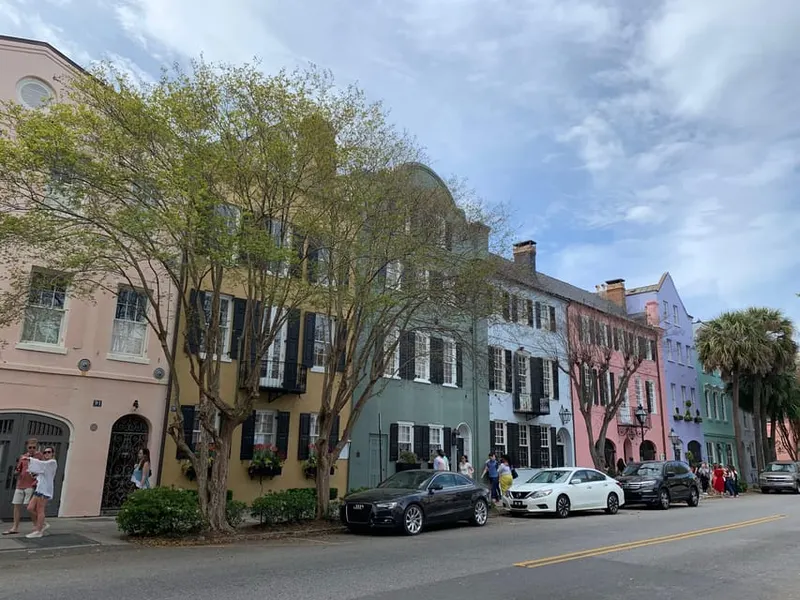
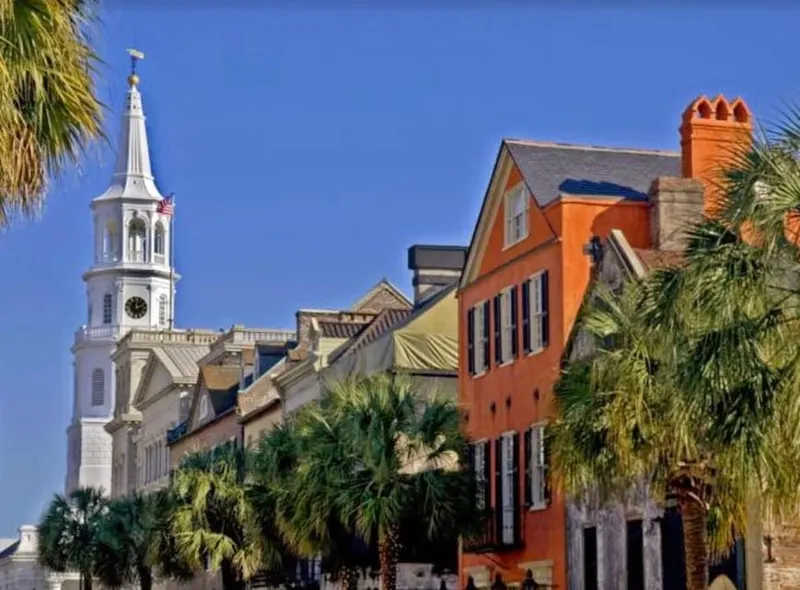
Thirteen Georgian rowhouses on East Bay Street painted in pastel colors, pink, yellow, blue, green, and coral. Built in the 1740s for merchants who ran businesses on the ground floor and lived upstairs, these homes fell into disrepair after the Civil War before being restored in the 1930s. The colorful paint scheme came from that restoration, possibly inspired by Caribbean architecture.
Rainbow Row is one of Charleston's most photographed locations and the longest cluster of Georgian rowhouses in America. The homes are private residences, so you can only view them from the street. They stretch along the 79-107 block of East Bay Street, a short walk from Waterfront Park.
Best Time to Visit
Early morning (before 9 AM) offers the best light for photos, the east-facing facades catch the sunrise, and fewer crowds. Late afternoon also works, though you'll share the sidewalk with tour groups. Weekday mornings are quieter than weekends.
The Battery & White Point Garden
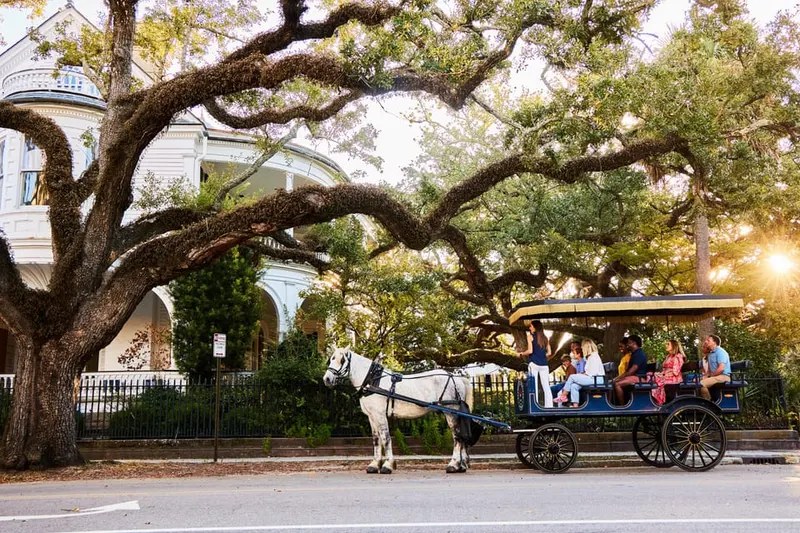
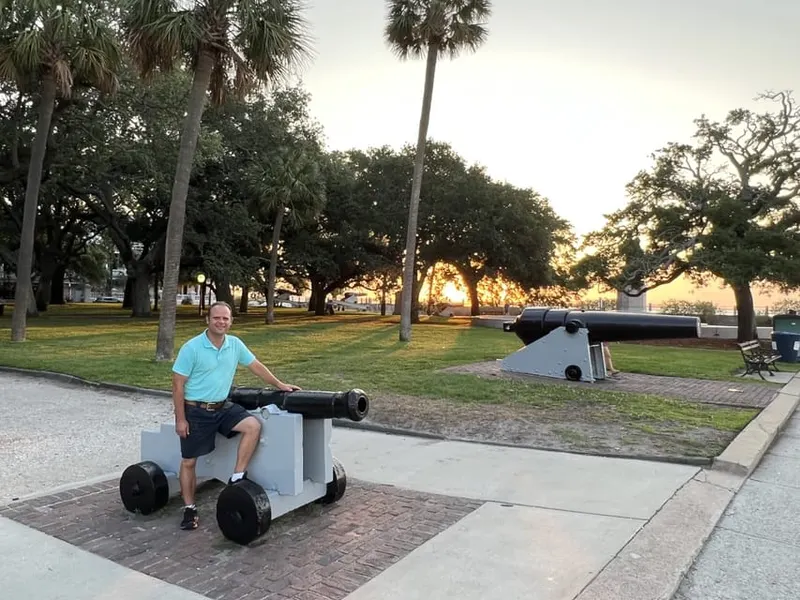
The Battery is a seawall and promenade at the southern tip of the Charleston peninsula, lined with some of the city's grandest antebellum mansions and ancient live oak trees. The defensive fortification once protected Charleston Harbor; during the Civil War, Confederate cannons here fired on Union ships. Today it's a waterfront park with views across the harbor to Fort Sumter.
White Point Garden sits at The Battery's tip, shaded by live oaks and dotted with Civil War monuments and cannons. Locals jog here at sunrise and couples walk at sunset. The surrounding streets, South Battery, East Battery, and Murray Boulevard, feature Charleston's most impressive historic homes, some dating to the 1700s.
Walking from Rainbow Row to The Battery takes about 15 minutes and covers the most scenic stretch of downtown Charleston. Combine both in a morning walk before the heat builds.
Charleston City Market
Four blocks of covered market sheds stretching from Meeting Street to East Bay Street, operating since 1807. The Great Hall and open-air sheds house dozens of vendors selling sweetgrass baskets, jewelry, art, local food, and souvenirs. While the goods have changed over two centuries, the market remains central to Charleston life.
Skip the generic t-shirts and cheap souvenirs. The market's treasure is the sweetgrass baskets, handwoven by Gullah Geechee artisans using techniques passed down from West African ancestors through generations. The baskets range from $50 for small pieces to several hundred dollars for larger works. They're genuine folk art with deep cultural significance, not mass-produced imports.
The Night Market on Friday and Saturday evenings adds more vendors, food options, and live music. It's busier but more festive than daytime hours.
Angel Oak Tree
A Southern live oak estimated at 400-500 years old, standing 65 feet tall with a canopy covering 17,000 square feet. The massive limbs spread horizontally and rest on the ground, some extending 90 feet from the trunk. The tree has survived hurricanes, earthquakes, and centuries of Charleston history.
Angel Oak Park is on Johns Island, about 20 minutes from downtown Charleston. The park is free to visit and includes picnic areas and a small gift shop. The tree impresses more in person than photos convey, the scale is difficult to capture.
Tip: Combine Angel Oak with Folly Beach, which is another 15 minutes further on the same route. Visit the tree first (less crowded in morning), then head to the beach for the afternoon.